The Half-Second Handshake: Choreographing AR Try-On for British Fitting Rooms
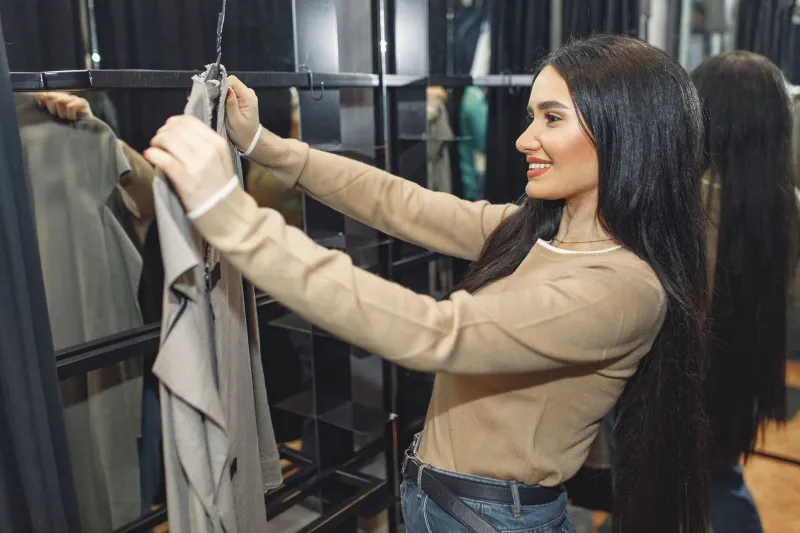
AR try-on spent years being shown at arm's length: a phone held out, a jacket floating just off the shoulder, a presenter saying 'imagine this in the mirror.' In 2026 the technology is close enough to the real thing that the cracks are visible. And most of those cracks are motion cracks.
The overlay is not the product. The handshake between the shopper's body and the render is the product. Get that half-second wrong and a decent garment looks like a haunted sticker. Get it right and the shopper stops noticing the technology long enough to notice the fit.
Latency Is a Choreographic Problem
Most AR try-on briefs still talk about frames per second. Shoppers talk about lag. A garment that arrives a beat late at the shoulder, then overshoots, then settles with a nervous wobble, reads as cheap — even if the fabric shader is immaculate.
Motion designers can hide a lot of latency with choreography. Lead the garment in slightly before the body settles, then damp the follow-through. Avoid fast reveals and snap-to-body effects; they expose every dropped frame. If the render is late, the overlay should arrive softly and settle early rather than arrive late and try to catch up.
Design for the network you have, not the one in the studio. Test at 200ms of added delay, then 400ms, then a full second. The one-second version will feel broken, but it tells you which parts of the motion are doing the emotional work. Usually it is the settle and the shadow anchor, not the swish.
Shop Lighting Is Not a Studio
British fitting rooms are not lighting stages. They are small boxes with mixed fluorescent tubes, a mirror that may or may not be clean, and a curtain that lets in whatever the shop floor is doing. Winter coats make people move differently. Queues make them move faster.
AR materials need to be restrained in that environment. Heavy specular highlights read as plastic under shop lighting. Pure white panels blow out against beige cubicle walls. A slightly matte finish, a little grain and a soft contact shadow will do more for believability than another round of cloth simulation.
Skin is the hard part. The overlay should not try to relight the shopper's face or hand. Keep the garment's ambient response close to neutral, then use a gentle local contrast pass so it sits in the room rather than on top of it. Uncanny is usually a lighting mismatch, not a tracking bug.
Tracking Glitches Need Their Own Choreography
Hands, hair, bags and coat sleeves will break body tracking. That is normal. The question is what the motion does when confidence drops.
A hard snap back to the last known position looks like a fault. A slow freeze looks like a decision. A fade to a simple silhouette outline, held for a beat, gives the shopper time to reposition without feeling judged by the camera. Build these confidence states into the motion system before launch, not after the first store complains.
Privacy cues are motion cues too. The camera should not start with a silent jump. Use a short, visible count-in. Keep the recording indicator calm and persistent. If processing is on-device, say so in the interface and let the motion settle for a moment before the try-on begins. Consent should feel like a pause, not a pop-up.
The In-Store Mirror Is a Different Brief
A phone try-on is intimate and handheld. An in-store AR mirror is public and watched. The motion needs to slow down. Idle loops should invite a shopper in without demanding a performance. Buttons should be large and few. Any privacy notice needs to be legible from two metres, not buried in a corner.
Multi-person tracking is still fragile in 2026. If two shoppers step into frame, the mirror should gracefully hand over to a queue state rather than guessing which body owns the jacket. That is a motion design problem as much as a computer vision problem.
2026 Checklist: Test in the Real Room
- Test on a mid-range Android phone and an older iPhone, not just the newest handset in the studio.
- Run the try-on at 200ms, 400ms and 1,000ms of network delay and note which motion beats survive.
- Test under mixed shop lighting: warm tungsten, cold fluorescent and daylight from a shop window.
- Test in a cramped cubicle with a winter coat, a handbag and a phone held at chest height.
- Check the contact shadow against a beige wall, a grey curtain and a mirror reflection.
- Break tracking deliberately: hands in pockets, hair down, scarf on, two people in frame.
- Confirm the camera count-in and privacy indicator are visible before any body render appears.
- Check that a tracking loss fades or freezes softly rather than snapping to a default pose.
- Test the in-store mirror at two metres and at arm's length; the UI should not need a tutorial.
- Watch a real shopper use it for 90 seconds without intervening. The moment they stop moving is the moment the motion has failed.
AR try-on will keep improving. Tracking will get steadier, phones will get faster and shop networks will get less hostile. But the motion still has to do the polite, human work of making a digital garment feel like it belongs in the room. That is not a rendering setting. It is choreography, tested under a fluorescent tube and a queue.