Feed-First and Unforgiving: What the Retreat From TV Means for UK Motion Designers
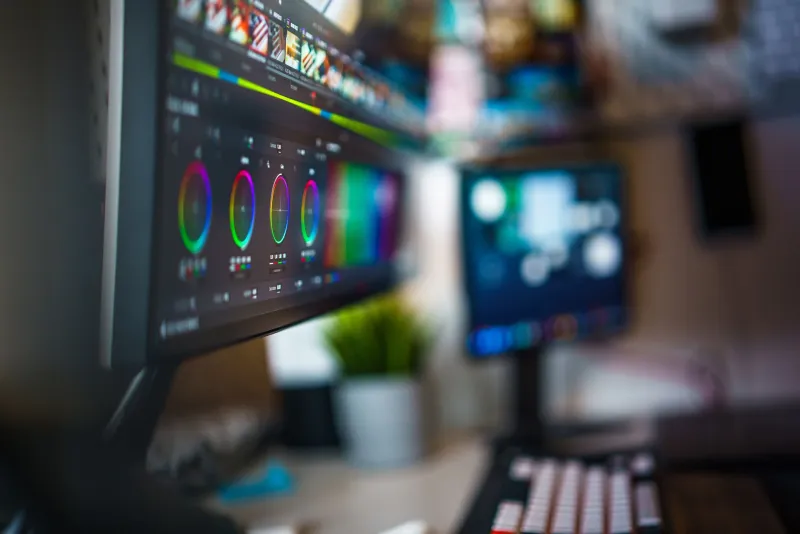
Photo: motion designer editing vertical social video on dual monitors in a UK creative studio, via thumbs.dreamstime.com
The slot is no longer the centre of gravity
For a long time, the 30-second TV commercial was the anchor of UK brand advertising. Media agencies built plans around it, production companies scoped around it, and motion designers learned to think in beats that filled half a minute. That anchor is dragging. In 2026, a growing number of UK brands are moving budget away from traditional TV spots and into short-form, motion-led social. This is not an obituary for TV. Big audiences still gather around big moments, and a well-made spot can still do a job that nothing else quite matches. But the quiet reallocation is real, and it is changing the briefs that land on motion desks.
The new default is not one film. It is a system of assets: six seconds here, ten there, fifteen for a paid cut, vertical for one platform, square for another, landscape for a third. Social platforms reward the first frame, not the slow build. The work is faster, smaller and more numerous. For motion designers, that is both an opportunity and a trap.
Shorter runtimes expose weak ideas
A 30-second spot can hide a thin concept behind a nice location, a celebrity and a well-chosen track. In six seconds, there is nowhere to hide. The hook has to be visual, immediate and legible without sound. Designers are being asked to solve more in less time. That is not dumbing down; it is compression.
The practical response is to storyboard for the shortest cut first. If the idea works at six seconds, it will survive at fifteen. If it only works at thirty, it is probably a TV idea wearing a social costume. Build motion tests early. Check type size on a phone, not on a studio monitor. Test captions and platform UI overlays. Design for the thumb, not the sofa.
One master, many deliverables
The pipeline problem is versioning. The old workflow was one hero film and a handful of cutdowns. The new workflow is one campaign idea and dozens of outputs. If you treat every aspect ratio as a separate job, you will burn time and margin. Build master scenes that can be reframed, parameterised templates for end cards and lower-thirds, and shared asset libraries. Name things properly. Automate exports where it makes sense. But do not automate taste.
Aspect ratios are not crops. A 9:16 frame is a different composition, not a slice of a 16:9 one. Design for vertical from the start. Consider captions, safe zones and the way platform interfaces crowd the edges. The same motion language should hold across formats, but the hierarchy may need to change. What reads as a bold gesture in landscape can become a clumsy blob in vertical.
Pricing models need to catch up
Hourly rates tied to TV production do not map neatly onto social volume. Clients may expect twenty assets for the price of one spot. That is a recipe for resentment. Move towards tiered packages: concept and motion system first, then volume deliverables. Define revision rounds clearly. Charge for adaptation, not just rendering. Sell the system, not the seconds.
Retainers can work if scope is explicit. Usage and media matter too. Social campaigns can run longer and across more territories than a single TV flight. Be clear about licensing and renewal. The goal is not to punish clients for wanting volume; it is to price the work honestly so the studio can still do it well.
Protect the craft while the canvas shrinks
The risk is that social-first work becomes disposable. It does not have to. Short-form can be beautiful, strange and precise. UK motion designers have a strong tradition of craft, from title sequences to broadcast branding to title cards that do more in three seconds than some films do in three minutes. The constraint is the point. Treat every six-second cut as a complete thought. That is how you keep standards high when the runtime drops.
The 30-second slot is not disappearing. It is just no longer the only room in the house. Designers who can work across the whole house—quickly, clearly and without losing the plot—will be the ones brands call.